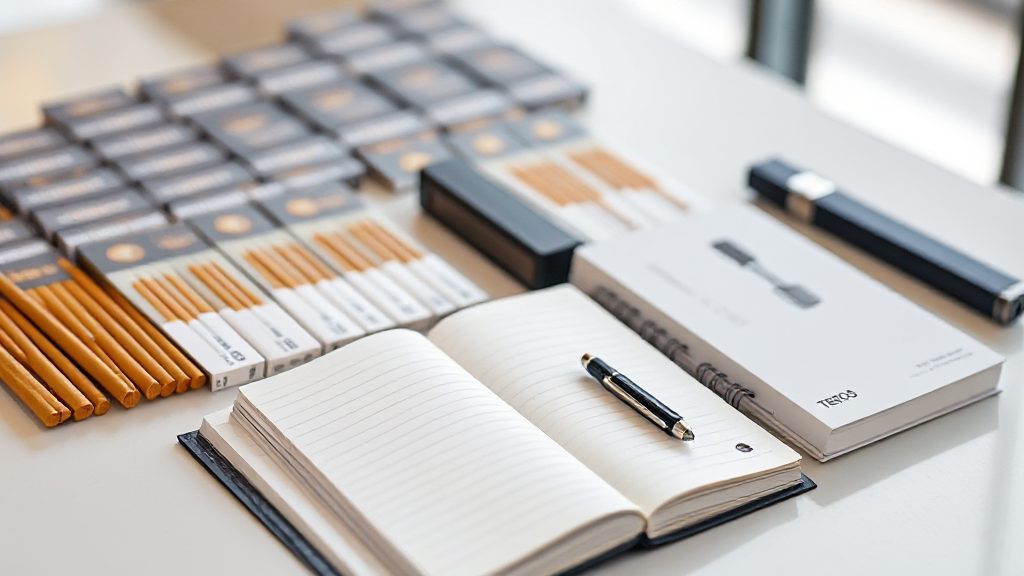
Notebook Entries: Observing TEREA Sun Pearl Across Sessions
These are informal observation notes kept by an adult user of heated tobacco devices across several sessions with TEREA Provence Pearl, recorded for consistency rather than persuasion. I started the notebook because my impressions of a stick tended to drift between the first session and the fifth, and I wanted a written record instead of a memory of a memory. Each entry below is dated, limited to what I actually noticed, and written in plain language so that a later reading does not require interpretation.
Why I Keep a Session Notebook at All
Heated tobacco is a small-scale experience. The differences between one stick and another are real but subtle, and they are easy to overwrite with whatever mood the last session left behind. A notebook forces a kind of discipline: I write what happened before I decide what I think about it.
My method is deliberately unglamorous. I use the same device, charge it the same way, and record four things per session: the date, the approximate time of day, how the stick felt on the first few puffs, and whether anything changed before the session ended. I do not score anything out of ten. Scores invite me to defend yesterday’s score instead of observing today’s session.
Consistency of conditions matters more than precision of language. If I change two things at once — a different device, a different time of day — I note both, because otherwise the entry is not comparable to the ones around it.
Entry One: First Session and Initial Impressions
Session conditions
Mid-afternoon, device fully charged, stick taken from a pack stored at room temperature. No other variables changed from my usual routine.
What I observed
The first puffs were gentle rather than sharp, and the draw felt consistent from the start — no early tightness that needed a second attempt. The aroma in the room afterwards was mild and did not linger the way some heavier profiles do. I noted the word “clean” in the margin, then crossed it out because it is vague; the more useful note was that nothing in the session demanded attention.
What stood out was the absence of a learning curve. Some sticks ask you to adjust your draw rhythm in the first minute. This one did not, which is exactly the kind of detail a notebook is for: it is forgettable by the next day unless it is written down. I also recorded that the session ended without the tail-end harshness I associate with sticks that start too strong.
Entry Two: A Repeat Session Under Different Conditions
Session conditions
Early evening, same device, but the stick came from a pack that had been carried in a jacket pocket for a few hours. Slightly cooler than room temperature.
What I observed
The opening was very close to the first entry, which was the point of the repeat. The main difference was pacing: in the evening session I drew more slowly, and the profile seemed to hold together a little longer before flattening out. That is a note about my behaviour as much as about the stick, and I wrote it that way rather than blaming the product.
I also started paying attention to the device itself. The stick seated cleanly, the device did not need a mid-session clean, and there was no residue visible when I removed it. Device behaviour belongs in the notebook as much as flavour does, because a stick that suits a neglected device will read differently from one that suits a freshly cleaned one.
By this second entry I had stopped comparing the experience to anything else and started describing it on its own terms. That shift is worth noting: comparison is useful for a purchase decision, but it is a poor instrument for observation.
Entry Three: Midweek Session and the Question of Consistency
Session conditions
Midweek, late morning, device cleaned the previous evening. Pack stored in a drawer, away from heat.
What I observed
This was the session that tested the notebook’s usefulness. My memory said the previous sessions had been “smooth”; the written record said the first puffs had been gentle and the middle section had been the most consistent part. The written record was more accurate. The midweek session matched the earlier entries closely, with the middle of the session again the steadiest portion.
Two small things were worth recording. First, the aroma was noticeable in a closed room but faded quickly once the window was opened — a practical detail that never appears in a product listing. Second, the session length felt shorter than the first entry, but the clock said otherwise; my perception of duration had drifted, not the stick. Perceived duration is the least reliable thing I record.
If you are building your own comparison set, this is the point where a second reference stick helps. Keeping notes on one product in isolation tells you about that product; keeping notes on two tells you what is actually distinctive. Adult users who want to run that kind of side-by-side can browse the TEREA Provence Pearl listing alongside other sticks in the same range and set up their own reference pair.
Entry Four: Late Session and What Changed Over Time
Session conditions
Late evening, device charged after a full day of use, stick from the same pack as the midweek entry.
What I observed
The late session was the first one where I noticed the finish more than the opening. The profile held steady rather than tapering sharply, and there was no need to shorten the session to avoid an unpleasant end. Whether that is the stick or the fact that I was less rushed at that hour is genuinely unclear, and I recorded it as unclear rather than resolving it in favour of a tidy conclusion.
The cumulative notes now show a pattern I would not have trusted from memory alone: the opening is gentle, the middle is the most consistent stretch, and the finish is undramatic. None of those observations is exciting. All of them are useful, because they describe a stick that behaves the same way across conditions rather than one that peaks once and then disappoints.
One caution for anyone keeping similar notes: do not change your device, your cleaning routine and your storage habits in the same week and then draw conclusions about the stick. Change one variable at a time or the notebook is fiction with dates on it.
What the Notebook Adds Up To
Across four sessions, the record is consistent: a gentle opening, a steady middle, an undramatic finish, and no device friction worth reporting. The notebook did not turn TEREA Provence Pearl into a different product than it appeared to be in the first session — it confirmed that the first impression was not an accident of mood or timing.
The larger lesson is about method. A short written record, kept honestly and with one variable changed at a time, is more useful than a strong opinion formed in a single sitting. It also protects against the opposite failure, where a single off session gets remembered as the whole story.
If you keep your own notes, keep them boring: date, conditions, what happened, what you are unsure about. The uncertainty column is the one that will teach you the most, because it is where you stop describing the product and start describing your own habits around it.